Get a weekly roundup of the industry news you need.
“We are committed to making your dining service with us even better”says the menu perched on the seat of a westbound Lake Shore Limited roomette, departing Albany-Rensselaer, N.Y. on June 17, 2018. With that as the measuring stick, how does Amtrak’s new pre-prepared, cold-meal service measure up?
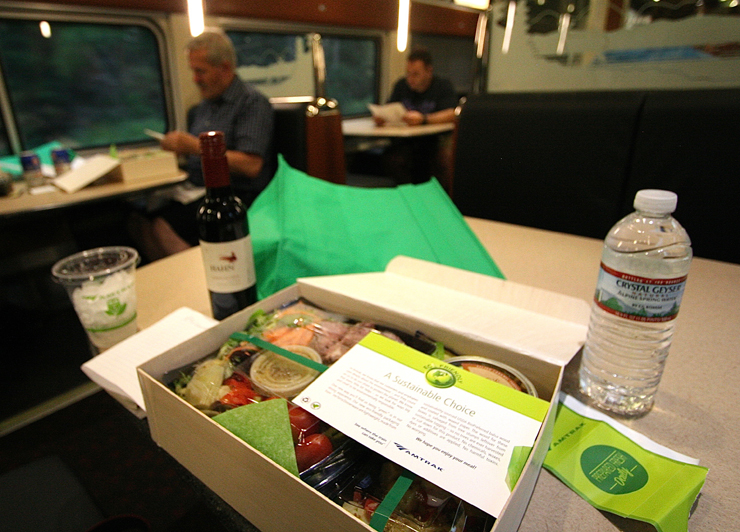
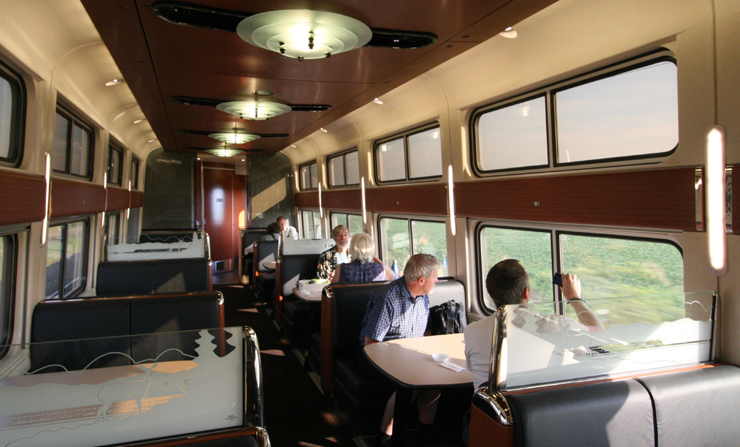
It was encouraging to see Viewliner II diner No. 68021, Raleigh, just ahead of two sleepers headed to Chicago. The car’s interior revealed not linen and silverware, or even paper tablecloths and plastic utensils, but bare tables festooned with green cloth bags. Here is one of five cold meal choices a passenger retrieved: a chilled grilled beef tenderloin salad. The meat in the tightly-wrapped plastic container was cold, tender and tasty, but was dwarfed by lots of lettuce and a few vegetables. On the plus side, a half bottle of wine was more than sufficient to offset the excess greenery.
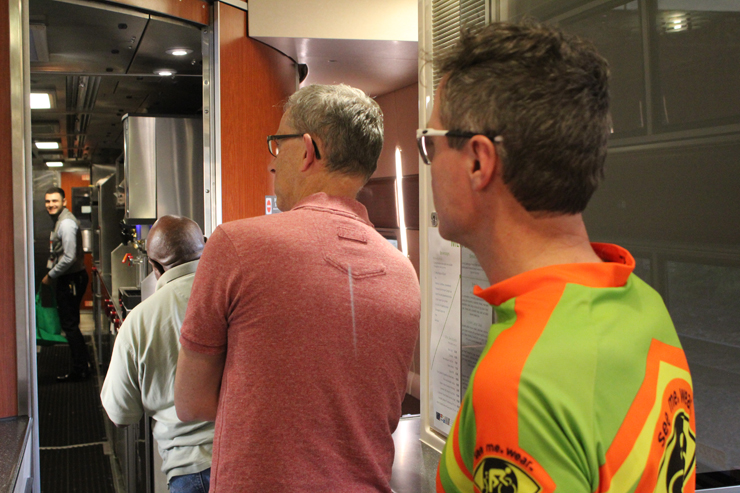
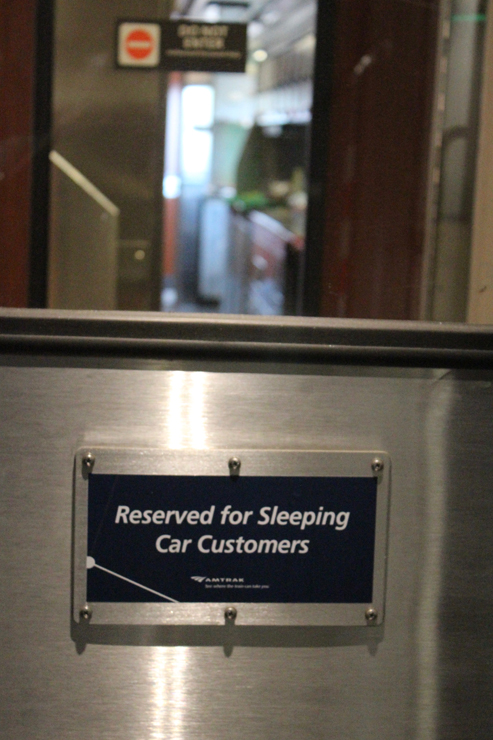
Most restaurants — even cafeterias — have someone who greets and seats patrons. Not so on the Lake Shore; the car’s only Amtrak representative is an “employee in charge,” seen here in the background with a green bag he is about to fill. He also fills drink orders and wipes down tables once people leave. Gone, according to another employee on board, are chefs and waiters based in New York and Washington. More than 30 lost their jobs when the Lake Shore and Capitol Limited switched to these “contemporary and fresh dining car choices for sleeping car passengers” on June 1. Those with enough seniority could choose to “bump” into other crew bases, potentially affecting worker morale and incomes systemwide.
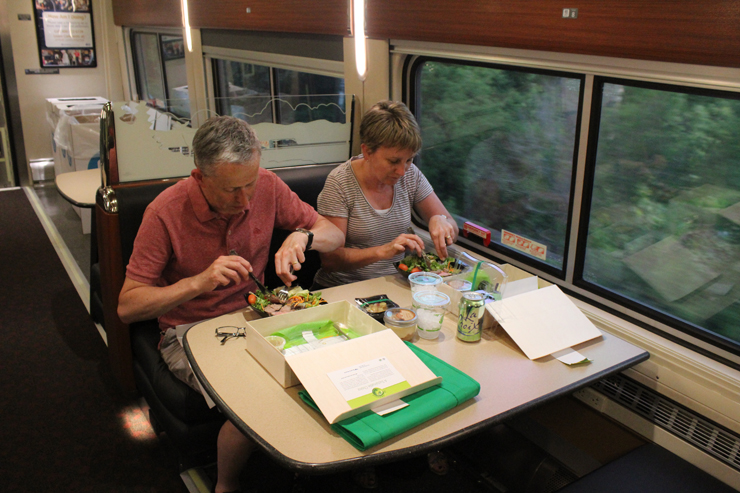
The large amount of packaging spread out on the table discourages others from joining this Australian couple headed to Chicago. This fulfills the contention of Amtrak President and CEO Richard Anderson, in a May 29 letter to private car owners, that “many people do not care to sit with strangers in the dining car.” (I wonder how he would know?) Both had chicken Caesar salads; also available are an antipasto plate (processed meat, olives, pickles, and beans); a vegan wrap (with marinated eggplant, vegetables, and hummus); and a children’s turkey and cheese sandwich plate (with orange segments, a string cheese stick and a presumably non-edible coloring book). All dinners except the vegan wrap and kids’ meal also come with salted caramel cheesecake. “A step backwards,” the man concludes.
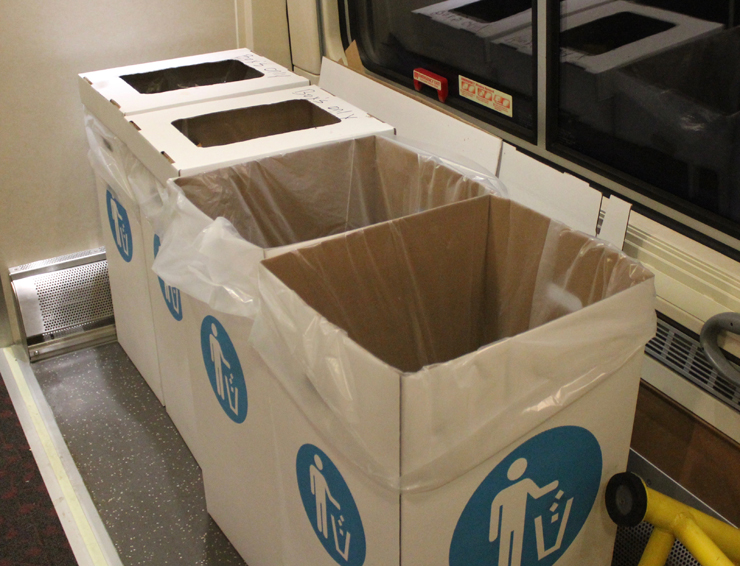
In one corner are big cardboard containers lined with plastic garbage bags, in which passengers are expected to separate and deposit their waste (they can keep the big green bags). A food-box insert labeled “A Sustainable Choice” explains the boxes are “eco-friendly” because “the balsa wood for these boxes is salvaged from tree stumps leftover [sic] from sustainable logging — so no trees are ever harvested or cut down for this product. No chemicals … harmful toxins. No worrying.” Nothing indicates whether the do-it-yourself separation means the balsa wood boxes are being recycled or just cleaned for the next trip, or whether the tons of landfill trash from café and dining cars are as “eco-friendly” as dishes washed, dried, and reused hundreds of times.
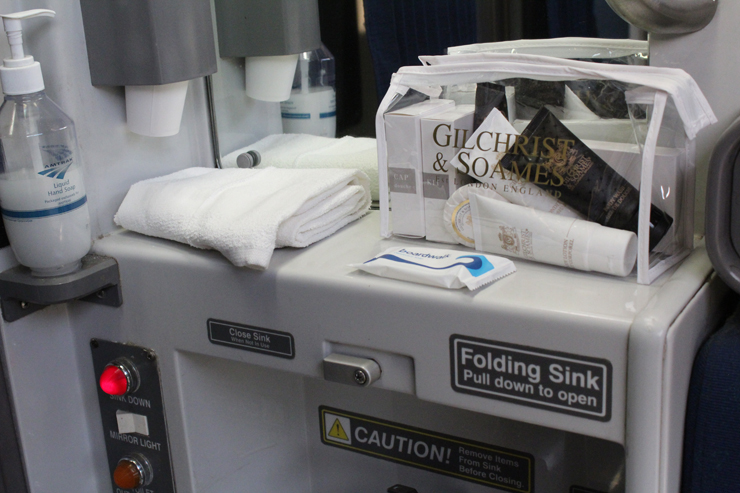
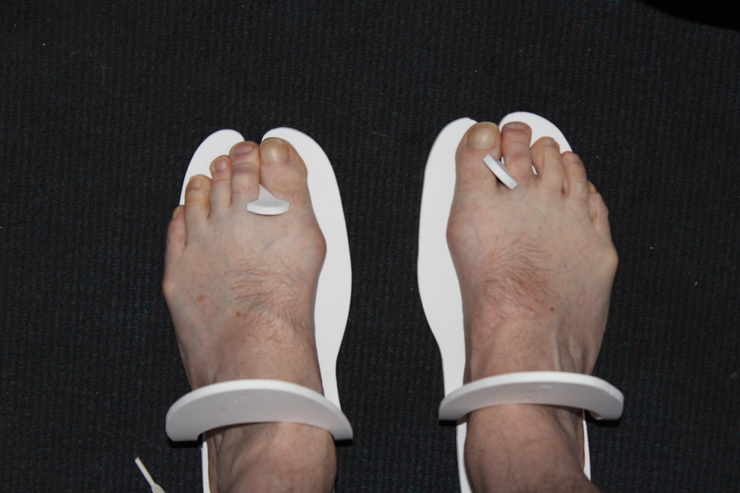
In roomette 6 of car 4921, a bulky Gilbert and Soames toiletry kit is waiting. This new amenity on the Capitol and Lake Shore contains shampoo, conditioner, body lotion, body wash, soap, a beauty kit (with nail file, Q-Tips, bobby pins, and an unidentified plastic object), a sewing kit, and shower cap — everything an overnight passenger needs, and similar to accoutrements given out by every hotel on the planet. Experienced Amtrak travelers will recall that past travel gifts tended to accumulate: stationery, bedtime chocolates, and snack packs of cheese and crackers left on the floor of heritage roomettes, which rodents managed to pop open.
Sunday night’s Lake Shore Limited originated at Albany-Rensselaer owing to trackwork in Boston commuter rail territory. It had been a half-hour late backing into the crowded station because, according to the gate agent, somebody had forgotten to water the cars during its multi-day layover. Yet it was nearly on time across Indiana as sleeping car passengers drifted in for breakfast at 8:35 a.m., not having to worry about service ending at South Bend, Ind., as was previously the case with full-service dining cars on this train and the westbound Capitol Limited. But the kitchen door was closed and locked; the employee in charge was nowhere to be found. “He’s been open since 6:00 a.m. and is taking his break,” advised the attendant in the café car next door. He returned at 9:07 a.m.
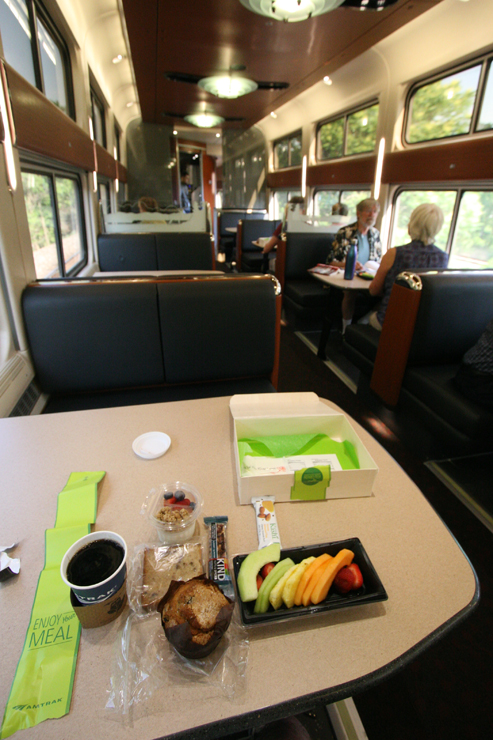
The sole morning offering is an “Amtrak Breakfast Bistro Box,” with a generous serving of fresh fruit, banana bread, a blueberry muffin, Greek yogurt topped with organic granola in a parfait, a Kashi honey almond flax chewy granola bar, and a Kind-brand dark chocolate nut and sea salt bar. The fruit selection, mostly melon, is balanced with a smidgen of protein but lots of cholesterol.
The Lake Shore had suffered the indignity of losing its heritage dining cars to old age several times over the last decade. But offering a Viewliner diner open to only sleeping car passengers deprives the train’s substantial coach patronage one of passenger-train travel’s inherent advantages over other modes: the walk-around, change-of-scene-while-traveling freedom a trip to the dining car provides. The idea of improving the product through menu pricing and selection changes, capturing the potential of this environment, is lost on current top management. Anyone at Amtrak who might suggest otherwise dare not speak up, because of the sole focus on the added costs that would be involved.
Anderson’s May 29 letter to the private car owners says, “We have feedback from many of our customers that our current offering isn’t successful on these routes.” I wonder what his mailbag looks like now?