

PORTLAND, Ore. – The Oregon Coast Scenic Railroad has filed a complaint in U.S. District Court seeking an injunction as relief from the Oregon Department of State Lands. The complaint alleges the state agency interfered with a reconstruction project and violated the company’s constitutional rights.
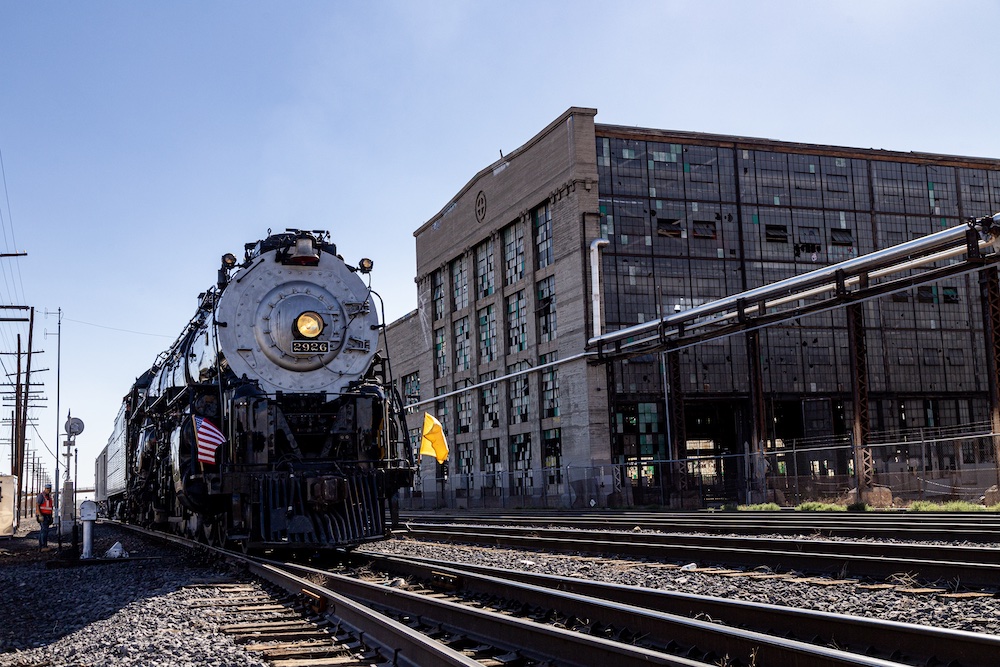
Oregon Coast Scenic is the lessee and operator of the Port of Tillamook Bay Railroad that runs between Banks and Tillamook. It operates regular excursion trains out Garibaldi and Rockaway Beach using Curtis Lumber Co. Heisler No. 2 and McCloud River Railroad 2-6-2 No. 25.
During winter storms in 2007, several portions of the Port of Tillamook Bay right-of-way were washed out, halting revenue rail shipments. Oregon Coast Scenic crews spent months clearing mudslides, boulders, trees, and other obstacles that blocked the line. Last year its reconstruction efforts reached Salmonberry, giving it 40 miles of operational track.
Now the railroad is working to rebuild track from Salmonberry to Enright. That work is nearly complete, but now the railroad has received a cease and desist letter from the Department of State Lands. The state is seeking to enforce a removal-fill law, which covers the removal of dirt and fill along riverbanks.
Attorney Martin E. Hansen, who is representing the railroad in the case, tells Trains News Wire the agency has told the railroad it must have a permit to do fill work along the Salmonberry River. However, Hansen says, state regulations do not apply, since the Port of Tillamook Bay Railroad is a federally regulated railroad under the Federal Surface Transportation Board, which expressly preempts state regulations.
“No railroad that has track fall into a river has to go and get local/state approval before they can fix it. The federal preemption clause of the U.S. Constitution is invoked,” Hansen says. Coincidentally, the state of Oregon is a part owner of the Port of Tillamook Bay Railroad.
“The Port of Tillamook Bay Railroad is regulated by the STB and the Oregon Scenic Railroad has an exclusive operating agreement to operate it, so obviously the OSRR has the same protection. Otherwise it wouldn’t have the ability to fix the railroad,” Hansen says. “They’re trying to say ‘Well, this is just a little tourist train that doesn’t connect to anything,’ but it doesn’t connect to anything because the track is blown out and we are trying to fix that,” he said.
“The Oregon Coast Scenic Railroad has been restoring this portion of the line since the fall of 2011. We started in January fixing Salmonberry up to Enright and it wasn’t until the last few weeks that the state all of a sudden decided that they wanted to get involved here and demanded we get a permit,” Hansen concludes. “We said no, it was a preempted project and so they are challenging the preemption. They admit that the Port of Tillamook Bay is a regulated railroad, but they just keep concentrating on Oregon Coast Scenic, which is the exclusive operator and has the same federal protections as any other railroad does.”
But the Department of State Lands does not agree. “The case we are making is that this particular railroad is not covered by that [federal] preemption. It doesn’t qualify for those preemptions,” Bill Ryan, Assistant Director of the Department of State Lands who manages the wetlands and waterways conservation division, tells Trains News Wire.
Ryan says the Oregon removal-fill law is designed to protect and conserve wetlands and waterways statewide. “In areas of particular environmental significance that have been designated essential habitat, basically any amount of removal or fill activity within the waterway requires an authorization from the Department of State Lands,” Ryan says. “Normally folks who are going to do any activity like the railroad is doing would come to us for a permit. The railroad hasn’t done so and they are claiming that state law is preempted by couple different federal statues related to surface transportation and railways. Our Department of Justice attorneys disagree. We would not have issued a cease and desist order to enforce the rule if we did not feel we had jurisdiction.”
Asked if the agency would have denied the railroad a permit if it had requested one, Ryan says denials are rare. “But they would have had conditions placed upon the activity that they did to protect the natural resources. It would be things like timing for when you can do work within the waterway, mandating erosion control features, and that sort of thing. They would have been able to get a permit, but there would have been conditions associated with it, and there is public review. We have a 90-day permit process,” he says.
Ryan says there are exemptions in the removal-fill for maintenance of structures that have been damaged but that’s assuming the structure has been operational recently. “This railroad got washed out in 2007 so it’s been almost seven years since the washout happened, so this is not what would be considered maintenance,” he adds.
The railroad’s complaint alleges that state enforcement would be unconstitutional because it would “impose an impermissible burden on interstate commerce” and be a “deprivation” of Oregon Coast Scenic’s rights.
A hearing is scheduled in the case for April 9.