



HOFFMAN ESTATES, Ill. — A suburb northwest of Chicago has gone on record opposing Canadian National’s plan to double track a portion of the former Elgin, Joliet & Eastern, citing concerns about the impact on the adjacent residential area.
The village of Hoffman Estates on Monday approved a resolution calling on the U.S. Army Corps of Engineers to conduct additional reviews of the project and for the railroad to mitigate impacts of the plan should it be approved.
CN, acting under its Wisconsin Central Ltd. subsidiary, is seeking to double-track 4.27 miles of the former EJ&E, which it acquired a decade ago to speed the flow of freight and bypass Chicago’s congested rail hub.
CN has applied to the Army Corps for a permit to construct the additional main line track from Shoe Factory Road to Spaulding Road, between Hoffman Estates and Elgin, Ill. The permit is necessary because of the potential impact on wetlands.
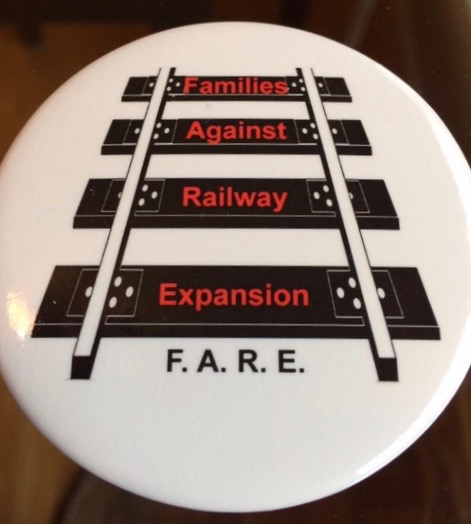
But the project has drawn opposition from residents of subdivisions whose homes border the tracks. The group FARE (Families Against Railway Expansion) contends that the double tracking will result in additional, longer, and faster trains, and will create more opportunities for locomotives to idle near homes. This will mean a significant increase in noise, vibration, air pollution and safety hazards, the group says.
The opposition and grounds for fighting the proposal are similar to an effort in Glenview, Ill., that ultimately blocked plans for new sidings that were part of a plan to allow more Amtrak Hiawatha service between Chicago and Milwaukee. [See “Illinois DOT bows to opposition on sidings for Hiawatha expansion,” Trains News Wire, May 13, 2019.]
Officials from Hoffman Estates, a village of more than 51,000 and the corporate home of Sears and the Midwest headquarters for AT&T, says the homeowners concerns should be addressed by the railroad and by the Army Corps. The agency is expected to make a ruling on the permit this fall.
The resolution requests that several actions be taken, including a prohibition on idling at crossover locations adjacent to residential areas, and the relocation of one crossover further away from homes. The village also seeks replacement of vegetation to screen the tracks. Furthermore, the village contends that the railroad’s permit application does not address the effects of train vibration, and makes inconsistent estimates of train volumes. The railroad’s Environmental Impact Statement submitted when the EJ&E was acquired should be revised, the village contends, because it did not include mention of the second mainline track.
CN, in a statement to Trains News Wire, said the “proposed track extension project is essential for enhancing the fluidity of the Chicagoland rail network. The track improvements will lessen our impact on residents and commuters by reducing train delays across the region. CN understands the residents’ concerns and will continue to follow the US Army Corps of Engineers’ permitting process. CN remains committed to engaging with communities along our tracks to highlight the public benefits of the project.”
At a public hearing in May, David Woodruff, CN’s Washington, D.C.-based head of government and public affairs, defended the project, saying it was part of the railroad’s $22 billion in capital investments over the past 10 years, including an expected $3.9 billion in spending in 2019. He and other CN officials said the project’s goal was to speed the flow of trains, not have them idling on a siding, which would be a “fundamental breakdown” of service to its customers.
The proposed work, when combined with existing tracks, would create a 6.1-mile-long double-track segment on a corridor that is one of the “primary north-south mainline tracks along the WCL corridor that transports between Winnipeg, Canada and Chicago,” CN’s petition states.
The forecast capacity for 2020 includes an additional nine trains per day along this stretch. The second main line “is intended to allow for uninterrupted flow of freight traffic by allowing northbound and southbound trains to pass freely without stopping or slowing,” the application states.
The Surface Transportation Board approved CN’s acquisition of the former EJ&E line in 2009 after a highly contentious battle with the communities along the 198-mile line. CN’s goal was to use the line to circumvent Chicago’s notoriously jammed hub, which sees hundreds of freight and passenger train movements each day.
— Updated at 5:50 p.m. on Oct. 22 with CN statement; updated at 9 a.m. on Oct. 23 to correct CN capital spending in 2019 to $3.9 billion.