

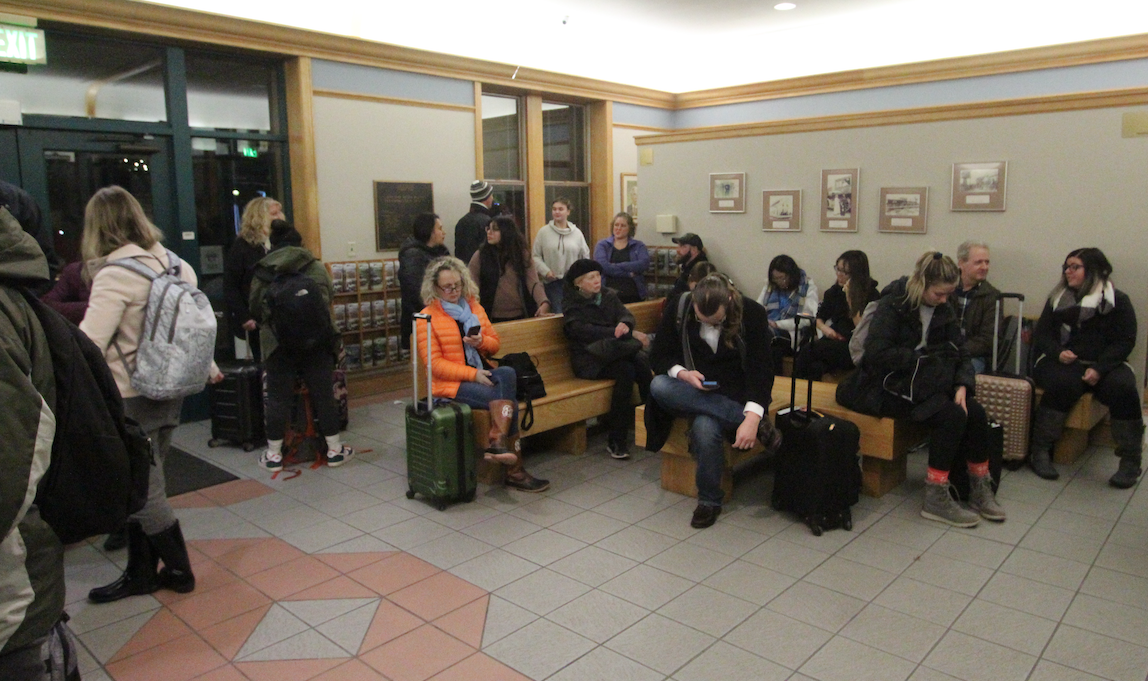
In fact, the big story that most outlets missed is that many Amtrak trains were sold out in advance on the busy travel days and generally survived otherwise paralyzing storms with modest delays but no cancellations.
A Trains News Wire review reveals that near total sell-outs occurred between New York and Boston in both directions on Sunday, when additional trains had been placed on the Thanksgiving weekend schedule as early as mid-October. As of midday Wednesday, Nov. 27, the only seats available Sunday into New York on the 22 Boston departures were on two trains that departed after 7:30 p.m. Eastbound, only the 2:40 a.m. Sunday morning New York departure showed any available space; the other 20 trains were sold out.
Before the weekend from New York to Washington, 17 trains were sold out Wednesday and 18 on Sunday, with the most remaining availability each day priced at $321 for an Acela business class seat and $196 for Northeast Regionals.
Upstate New York and Massachusetts were hard hit by snow on Sunday, but the only train significantly impacted was the Maple Leaf from Toronto, which arrived into New York’s Penn Station four hours late at 2 a.m., after its locomotives encountered unspecified mechanical problems. Delays to most trains on the Empire and Northeast Corridors averaged 30 minutes, but they all managed to navigate the harsh weather.
In the Midwest, all Chicago-St. Louis and Chicago-Michigan trains were sold out both Wednesday and Sunday, with only spotty availability on other regional routes even though most trains operated with an additional coach. All long-distance trains leaving Chicago on Sunday had no coach seats except the California Zephyr and Lake Shore Limited.
Despite harsh conditions — especially west of Denver and Minneapolis-St. Paul, most trains arrived into Chicago with delays averaging about three hours if they passed through heavy snowfall areas. The exceptions: Sunday evening’s inbound Zephyr arrived 7 hours late and Friday’s Empire Builder got in eight and a half hours late at 12:25 a.m.
But those were the exceptions, and Amtrak was able to get travelers to their destinations in spite of weather that disrupted many other travel plans.