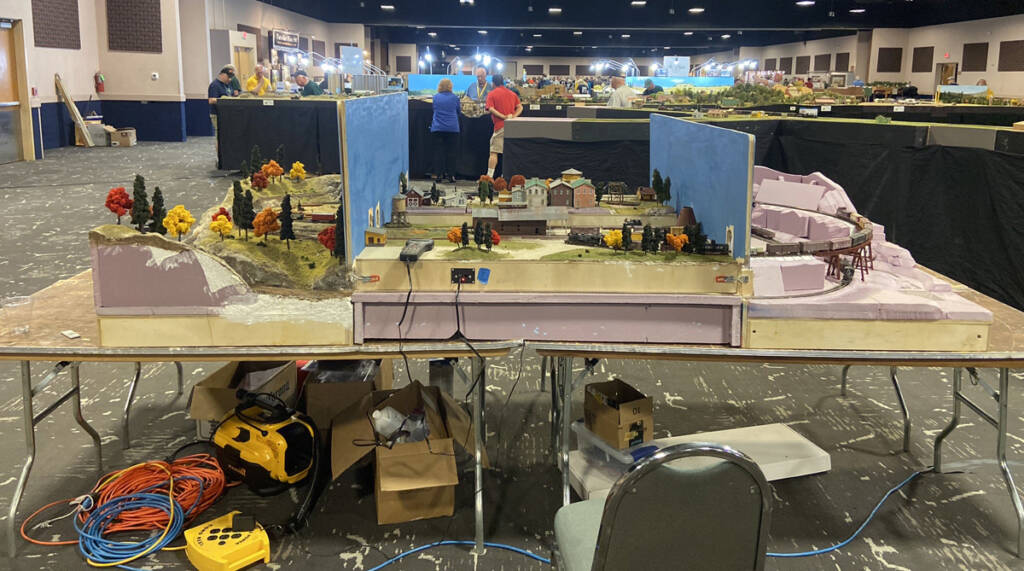
Built by Others is an article series showcasing layouts constructed by modelers using plans and projects from the pages of Model Railroader and its related products. Malcolm Furlow’s HOn3 San Juan Central layout first appeared in a multi-part series in the pages of Model Railroader between 1983 and 1984. Adam Palmer’s San Juan Central V2 […]
Read More…
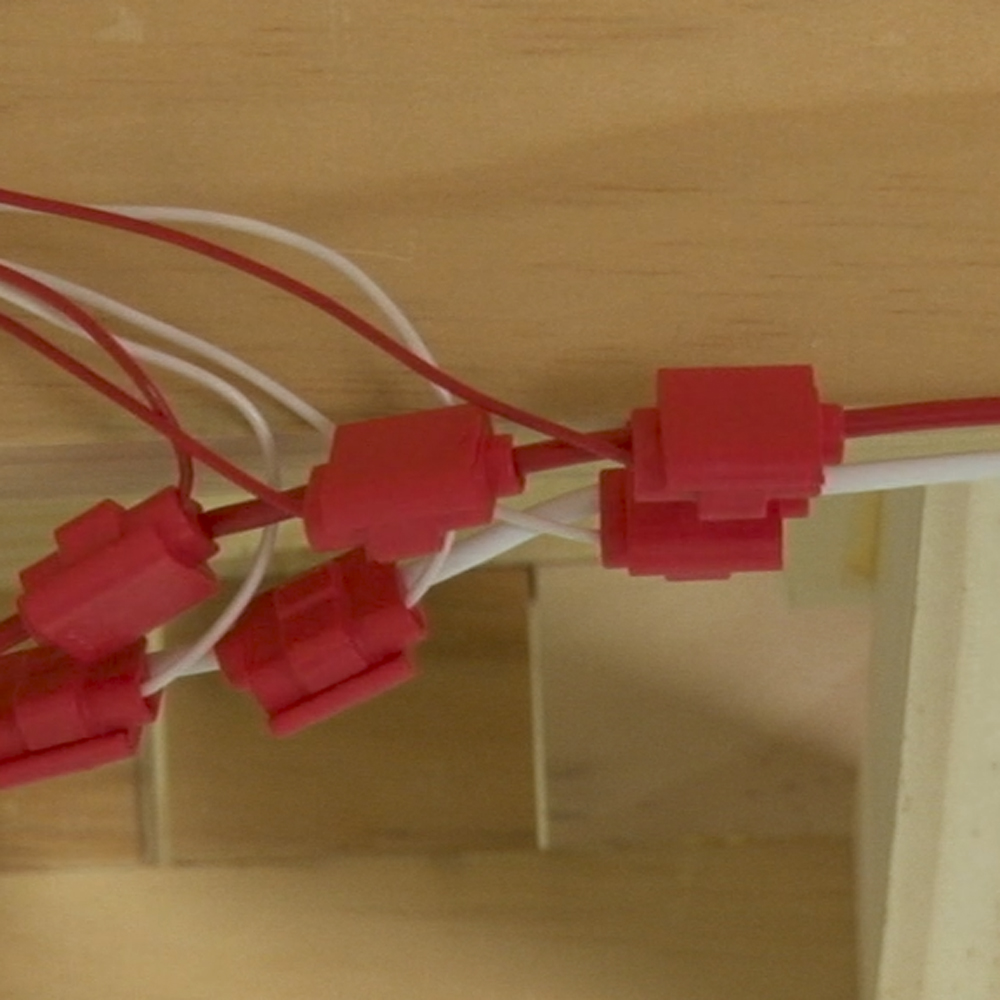
Q: I’m setting up a model railroad on a 6 x 12-foot table. The layout will use Digital Command Control. What would be the best wire size(s) to use on the layout? — Greg Kurtz A: Two considerations when selecting the right wire size, Greg: First, that doesn’t involve long bus-wire lengths, so No. 14 […]
Read More…
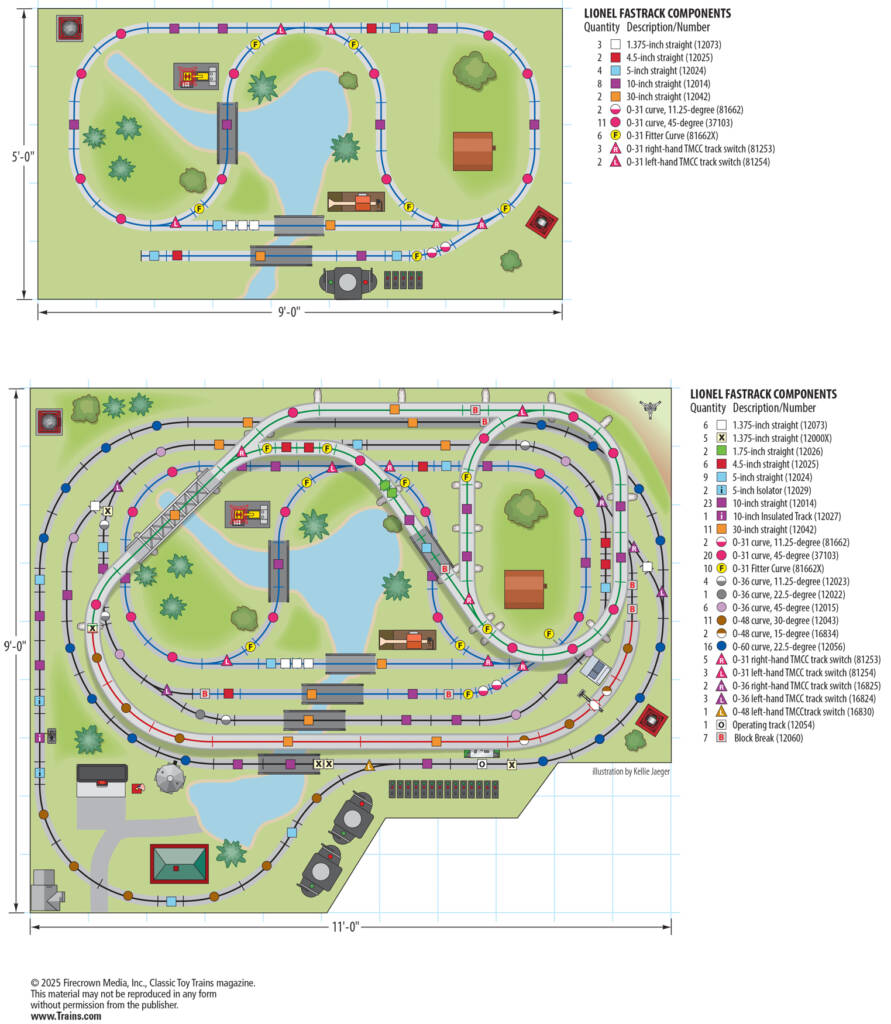
My submission to the contest has five basic features: A double reversing loop Multiple loops for simultaneous operation of several trains Interconnections between the multiple loops Two levels of track A ramp connecting the two levels of track Classic Toy Trains and the Lionel Collectors Club of America congratulate Wes Swartz as the second-place winner […]
Read More…
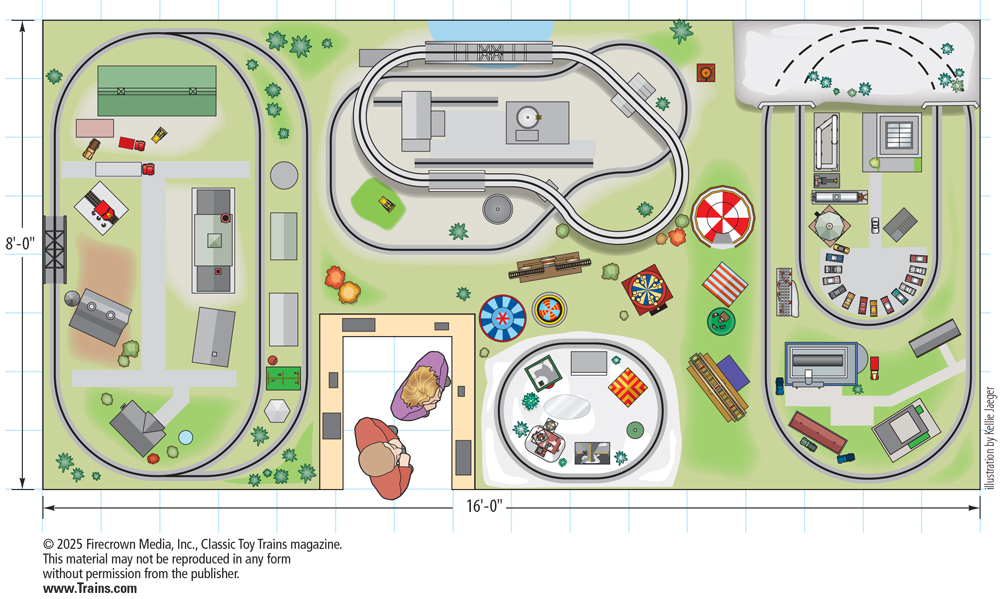
Name: Steve and Barbara Tapper’s O gauge layoutDimensions: 8 x 16 feetTrack: Lionel, MTH (diameters range from 27 to 42 inches)Switches: MTHMotive power: K-Line, Lionel, MTH, WilliamsRolling stock: Atlas O, K-Line, Lionel, Menards, MTH, Weaver, WilliamsControls: MTH Nos. Z-750 (3), Z-4000 (2) transformers with Lionel TrainMaster Command Control and MTH Digital Command SystemAccessories: K-Line, Lemax, […]
Read More…
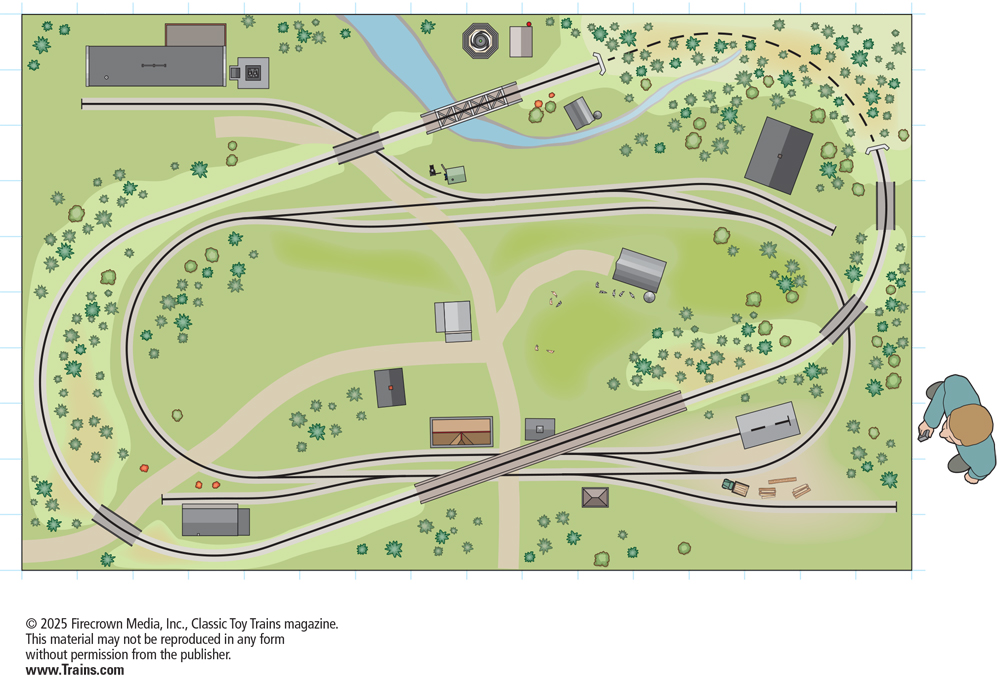
Name: Brian and Riley Inch’s O gauge layoutDimensions: 10 x 16 feetTrack: GarGraves (diameters range from 36 to 72 inches)Switches: Ross Custom Switches with Tortoise machinesMotive power: Lionel, MTHRolling stock: Atlas O, Lionel, MTH, WeaverControls: Lionel type-ZW transformer with Lionel Legacy and MTH Digital Command SystemAccessories: Gilbert American Flyer, K-Line, Lionel, Z-Stuff for TrainsStructures: Crescent […]
Read More…
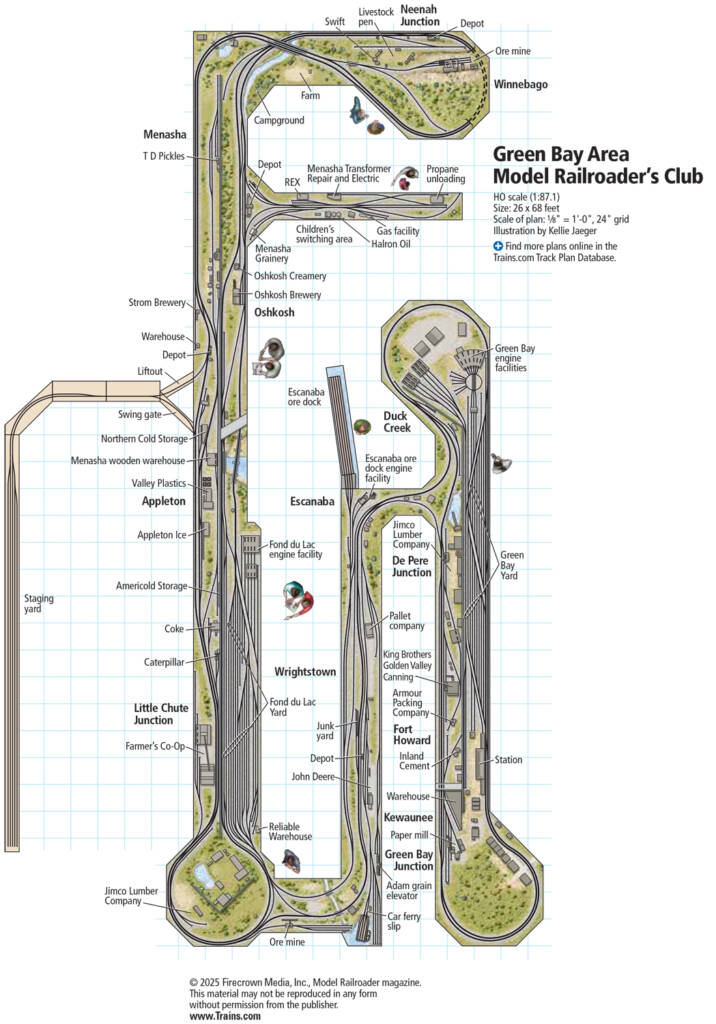
Facts and features Name: Green Bay Area Model Railroaders ClubScale: HO (1:87.1)Size: 26 x 68 feetPrototype: Green Bay Western, Chicago & North Western, and Milwaukee RoadLocale: Fox Valley, northeast WisconsinEra: 1950 to 1976Style: walkaroundMainline run: 2,000 feetMinimum radius: 42″Minimum turnout: No. 8 on mainlineMaximum grade: 3%Benchwork: Open gridHeight: 423∕4” to 491∕2“Roadbed: corkTrack: Atlas code 100 […]
Read More…
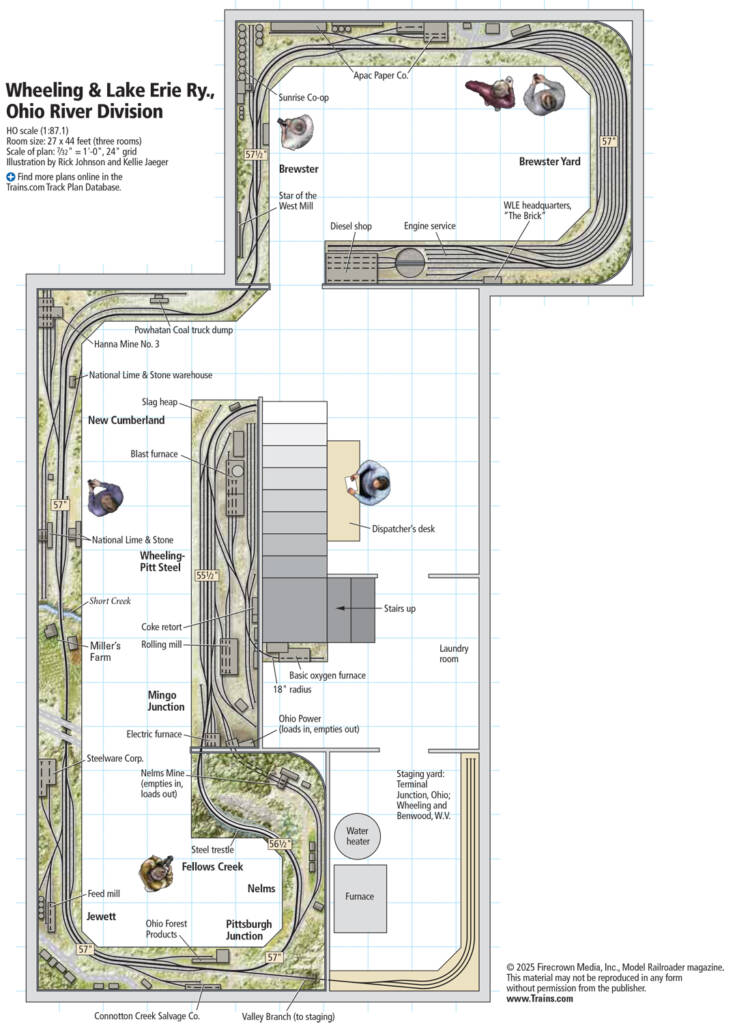
Facts and features Name: Wheeling & Lake Erie Ry. Scale: HO (1:87.1)Size: 27 x 44 feet (in three rooms)Prototype: original W&LE Ry.Locale: southeastern Ohio, West VirginiaEra: 1957Style: linear walkaroundMainline run: 115 feetMinimum radius: 30″ (main), 24″ (industrial)Minimum turnout: No. 6 (main), No. 4 (steel mill)Maximum grade: 1.75%Benchwork: shelf Height: 551∕2” to 571∕2“Roadbed: HO and N […]
Read More…
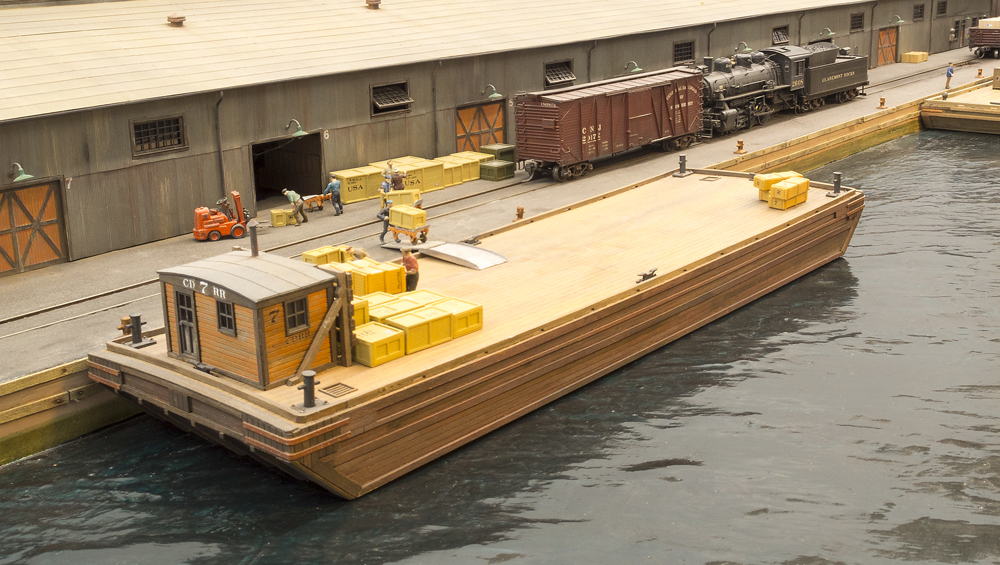
If you’re a fan of both boats and trains, building a model railroad involving both can be a rewarding experience. A rail-marine layout allows you to practice and utilize a variety of techniques and skills, including making water and building unconventional vehicles like car floats and cranes. They also don’t have to take up a […]
Read More…
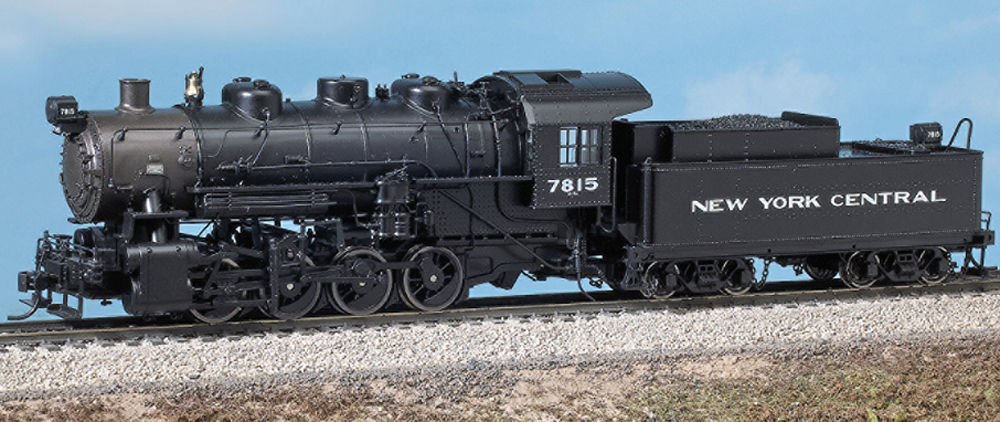
Q: The historic cars for the Milwaukee, Racine & Troy featured in the January 2025 episode of Ask Trains were very interesting (I grew up in Spokane, Portland & Seattle territory and am modeling some of that). What sort of steam and early diesel power would have been used to go with the cars of […]
Read More…
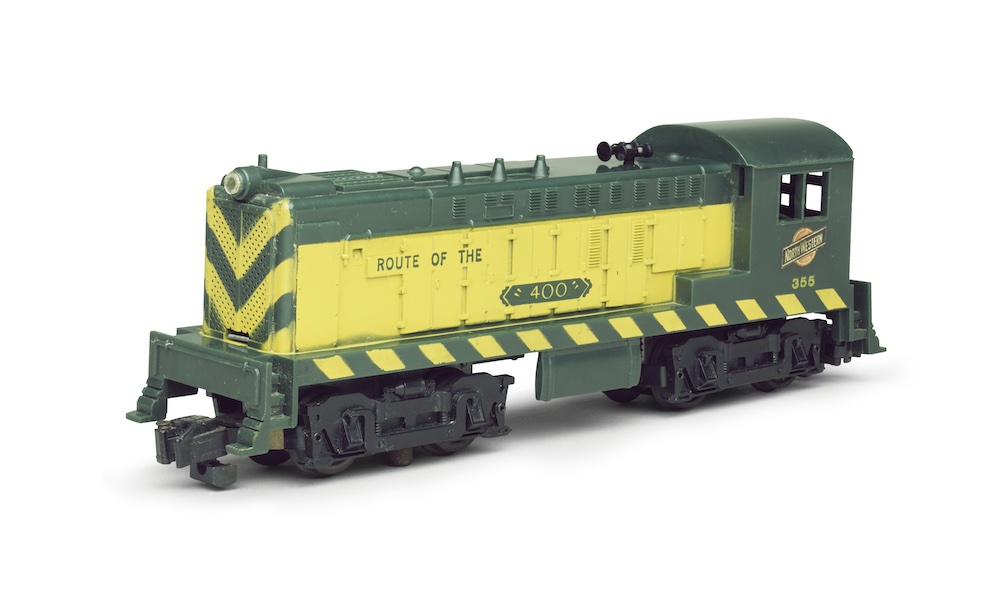
Founded in 1830, the Philadelphia-based Baldwin Locomotive Works grew into the world’s largest steam locomotive builder. Baldwin locomotives ruled the rails of countries large and small in North and South America, Europe, and Asia. Baldwin’s legendary boss, Samuel Valcain, was intrigued with the diesel by l920, and BLW produced its first demonstrator in l925. In […]
Read More…
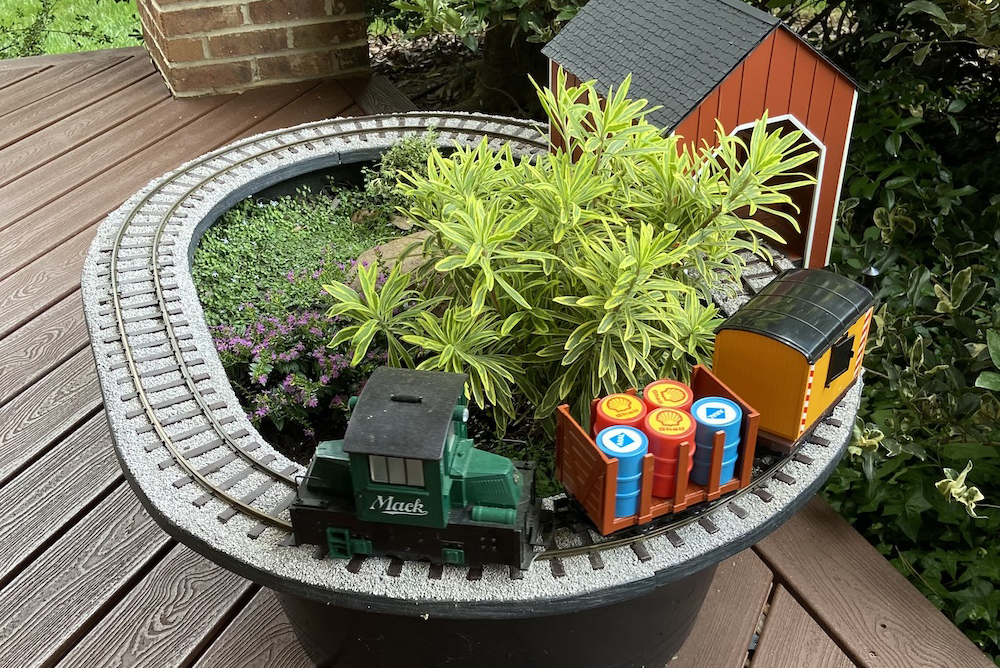
While traveling, I came upon an operating large scale layout that was a circle of track attached to the top of a whiskey barrel planter that had been cut in half. I thought that it would be fun to build something like that for our front porch, but wanted something a little larger and less […]
Read More…
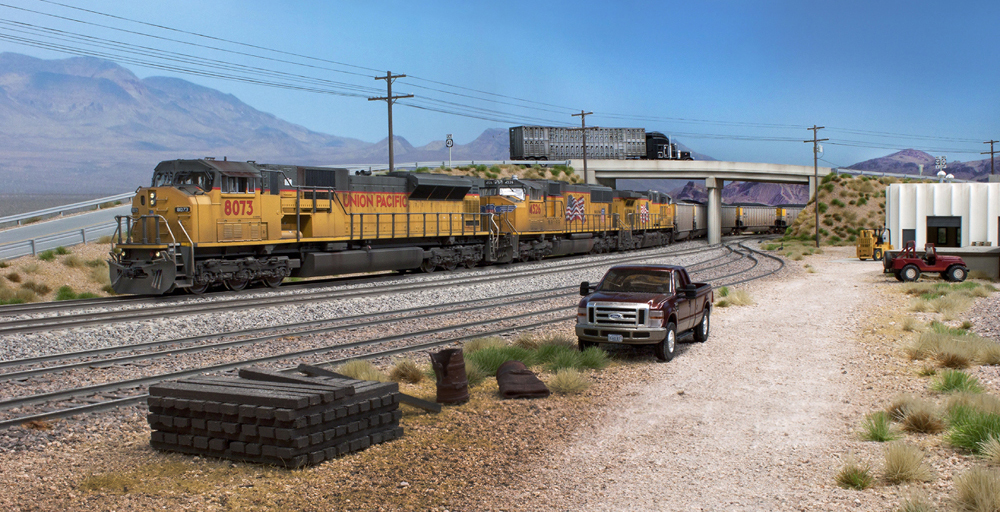
Today, model railroaders are blessed with a wide variety of commercial track in most popular scales. It wasn’t all that long ago that off-the-shelf track was largely one-size-fits all, with oversized rail, bulky ties, and little detail. Now, mass-produced track is available in different rail heights (called codes) with simulated wood or concrete ties, prototypical […]
Read More…