

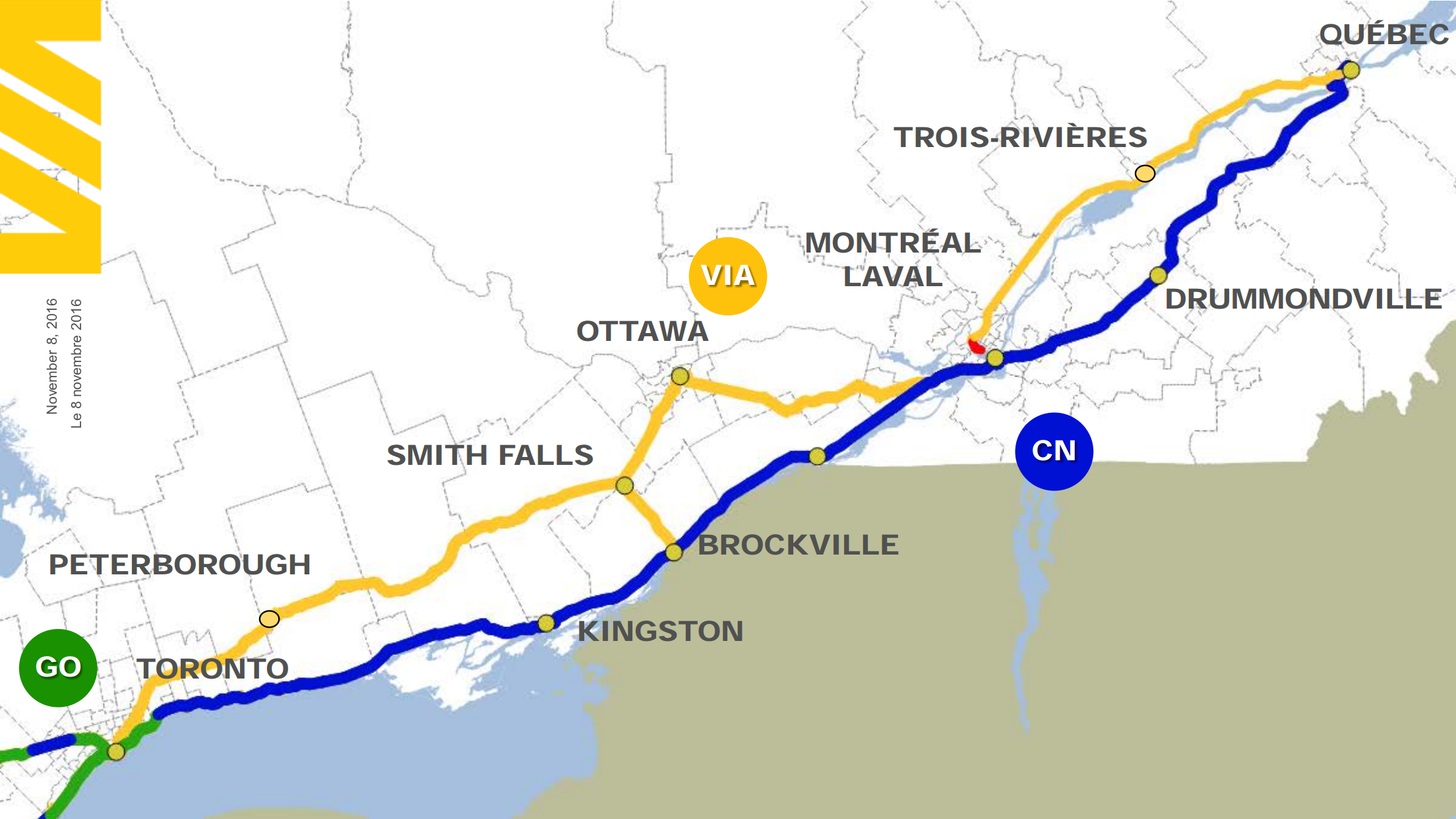
TROIS-RIVIÉRES, Quebec — Canada’s Transport Minister, Omar Alghabra, announced Tuesday that the government was taking the first steps in a long-discussed plan to build a “high-frequency” rail line serving the Toronto-Quebec City corridor, steps which could see procurements begin this fall for the proposed passenger-only trackage in part of the corridor.
In advance of a request for proposals for the procurement, the government will seek comment from Indigeous groups and communities along the route; work with the private sector to determine capacity and a model for the delivery of service; and seek to accelerate negotiations with railways on dedicated routes into and out of city centers.
“High Frequency Rail in the Toronto to Quebec City Corridor is a massive transportation project with the potential to transform passenger rail service by offering faster, more reliable, more frequent, and cleaner transportation service,” Alghabra said in a press release.
The website Daily Hive reports that Alghabra said at a Tuesday morning press conference that the High Frequency Rail route would be “the largest transportation infrastructure project seen by Canada in decades,” and that the project could shave 90 minutes off travel times between Toronto and Ottawa, which currently takes more than 4 hours, 15 minutes, by allowing top speeds of up to 124 mph. The National Post reports the project could cost anywhere from C$6 billion to C$12 billion, and reports Alghabra said up to 90% of the route will be electrified.
“The final budget will vary depending on what the final product is going to look like and that’s why right now we are starting engagement with the private sector,” Alghabra said.
The high-frequency proposal — which would include the rebuilding of a former Canadian Pacific right-of way for passenger trains — was first floated in 2015, but has been slow to advance. It received more than C$71 million for feasibility studies in 2019 [see “News Analysis: VIA’s ‘high frequency’ plan gets funding …,” Trains News Wire, June 25, 2019].
Share this article