



COLORADO SPRINGS, Colo. — The state legislature is considering a rail safety bill requiring railroads to be equipped with more safety features, limit the length and weight of trains carrying hazardous materials, and limit the time that trains can block major intersections while passing, according to a story aired by KRDO-TV.
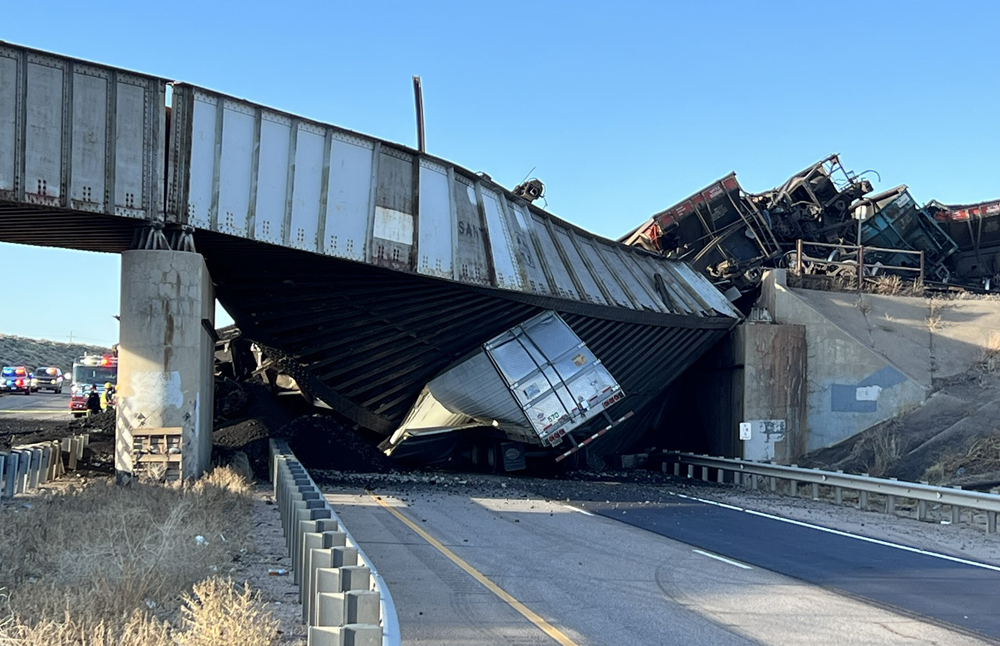
The bill’s sponsor, Colorado State Sen. Tony Exum, says he began developing the legislation over a year before the deadly derailment north of Pueblo on Interstate 25 northbound in October 2023 [see “One killed in coal-train derailment …” News Wire, Oct. 15, 2023].
“There were some conversations about rail safety last year, long before the derailment [about] what could be done,” Exum says.
Safety of the people involved in these operations, is where Exum says his primary concern lies. He is also worried about how derailments financially impact businesses and trade on major thoroughfares.
“When that rail derailment [I-25, Pueblo] happened, that impacted a lot of communities and a lot of goods and services that would have been delivered because of the detour,” Exum said.
The detours caused by the deadly train derailment north of Pueblo around took anywhere from 30 to 45 minutes while crews were cleaning up the coal spilled on the highway.
The solution presented by the proposed legislation is complex:
- Prevent railroads from carrying hazardous materials on any train longer than 8,500 feet.
- Prevent railroads from blocking crossings at grade for longer than 10 minutes.
- Require hot bearing and dragging detectors every 10 miles that notify the crew on the train of problems (not just the operations center).
- Allow a union representative access to all accidents (as defined by the FRA).
- Mandate minimum insurance requirements for railroads carrying hazardous materials.
- Require railroads to provide training and safety drills to respond to a hazardous material incidents
Exum says currently, there are no Federal Railroad Administration requirements that meet the standards set forth in his bill. If enacted into law, failure to comply with the provisions would result in fines. The proceeds, says Exum, will be used to improve rail safety.
As the bill goes through review over the next few weeks, Exum expects a potential challenge will be the train length limitation when transporting hazardous materials.
“Our goal is to make sure it has a fair hearing and folks from both sides get a chance to weigh in,” Exum says.
HB24-1030 will have its first committee hearing on Feb. 7.
Share this article