

WASHINGTON — A Federal Railroad Administration-sponsored study on the use of locomotive cab automation systems found human errors occurred in three of 10 sessions in a locomotive simulator, and recommends further training on the systems for engineers, conductors and dispatchers.
The study, “Human Error Analyses Associated with Locomotive Cab Automation,” also calls for further study on a number of questions, including the benefits of conductors noticing and warning engineers about potential errors.
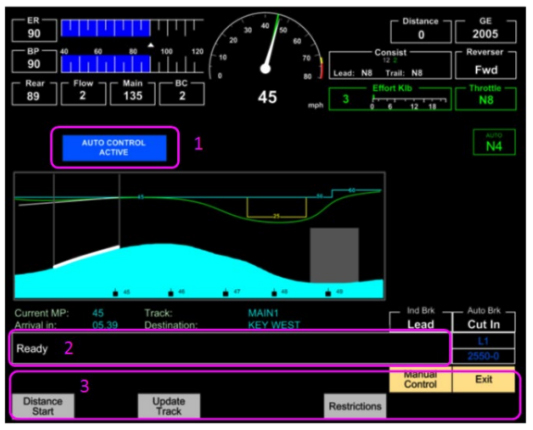
The study covered the use of Trip Optimizer, the cruise-control-like system for locomotives, and positive train control. The 10 sessions at the FRA’s Cab Technology Integration Laboratory included one in which operators overlooked a Trip Optimizer request for track information and failed to notice when the system switched to manual mode; a failure to stop before a grade crossing; and speed restriction violations, one of which could be classified as major.
Along with additional training, the research team recommends strategies including additional methods to check that data has been properly entered in the systems, adding technology that can detect on-track maintenance personnel or equipment; allowing conductors to make programming changes; encouraging engineers and conductors to review information prior to starting a trip; and duplicating PTC and Trip Optimizer displays at the conductor’s workstation.
Among items the report recommends for further study are the lack of a noticeable overspeed indication when Trip Optimizer is in manual mode, and PTC switching off without the engineer or conductor being aware.
Share this article