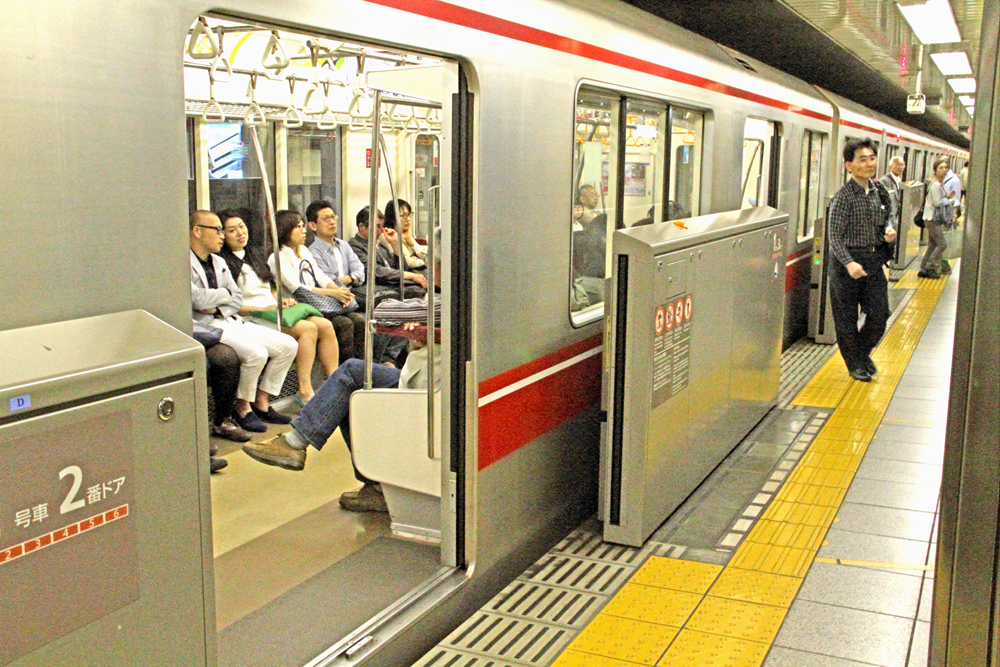


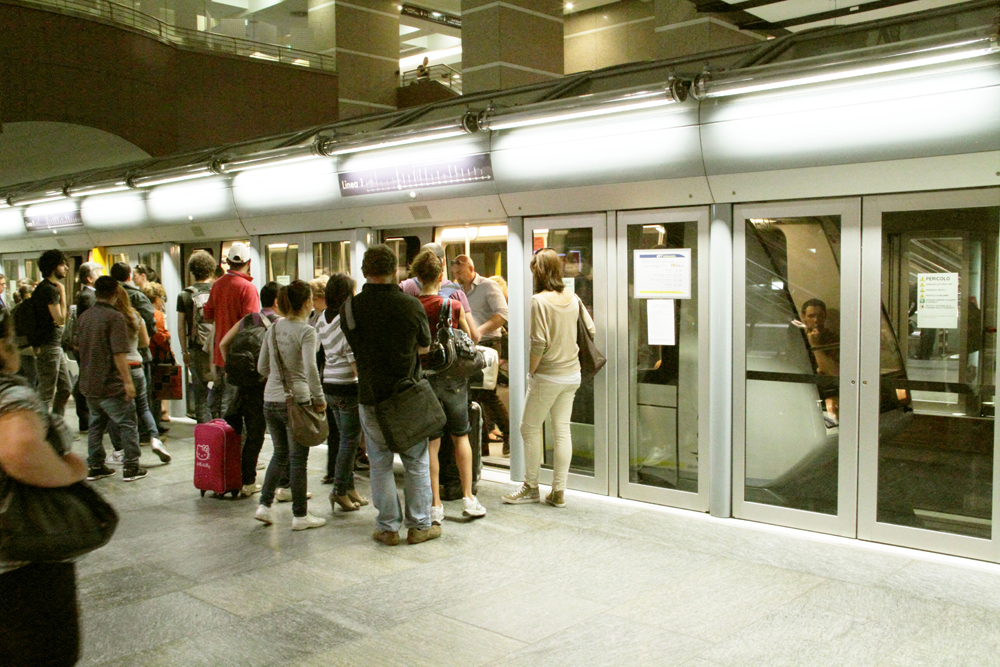
NEW YORK — Responding to an upswing in subway crime — including incidents, some fatal, in which people have been shoved off platforms onto the tracks in front of oncoming trains — New York City politicians are calling for the introduction of platform gates to keep passengers from falling onto the right-of-way. Such gates are used internationally in locations such as Tokyo and Turin, Italy.
Manhattan Borough President Mark Levine and 10 city councilmen representing that borough have written Metropolitan Transportation Authority Chair and CEO Janno Lieber, with Levine’s letter saying platform screen doors “must be given the priority they deserve, studied, and funded for installation. Each year, hundreds of New Yorkers enter subway tracks via accidental fall, trespassing, suicide attempts, and, in rare cases, being pushed. The tragic loss of Michelle Go on January 15th is but the most recent painful example.”
Go, 40, was killed when pushed in front of an oncoming train at the 42nd Street-Times Square station; 61-year-old Simon Martial has been charged with second-degree murder in the case.
In a response, Lieber said the barriers would prevent people from falling onto the right-of-way or dropping their cell phones onto the tracks, in addition to suicide attempts.
While installation of these gates has not been in the forefront of discussions, it is among the many options being discussed at the MTA.
A 2019 MTA study of floor-to-ceiling gates found they could only be utilized at 128 of the subway system’s 482 stations, at a cost of over $7 billion. Stations built on curves add to the cost, contraints, and installation difficulty of such gates. For example, the 14th Street-Union Square IRT Lexington Avenue station platforms are actually built on s-curves.
On other systems, where trains have standard-length cars and consists, platform doors are usually operated by the subway train conductor after stopping in the station. On automated system such as JFK’s Airtrain and in Torino, the computerized system handles the door opening and closing.
The New York City Subways offer different challenges. The Interborough Rapid Transit (IRT or A Division) has standard 51-foot cars and would seem suited for a platform door test. The B Division (BMT and IND combined) have different car lengths (60 and 75 feet) and different train lengths (eight or 10 cars), which would not appear to be a good place to test the concept.